Chapter 16 · Minds
Kinds of mind in 2497
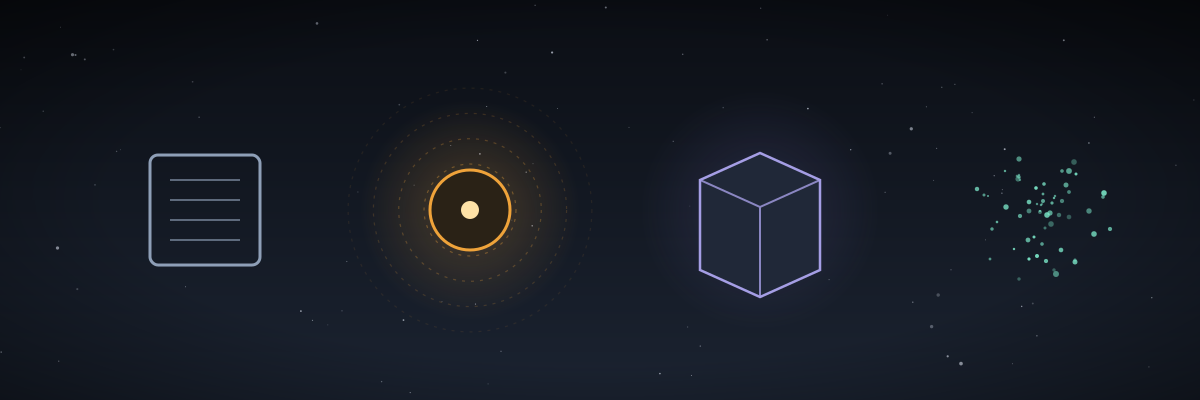
There are four kinds of artificial mind in 2497 — tools, the Raised, Vault minds and ferals — plus two conditions that befall sentient ones, Dissolution and the hothouse. Humans are not one kind either: some are augmented within the limits the Dissolution has so far set, and almost everyone off Earth has been genetically adapted to their world.
| Kind | Sentient? | What it is | Typical role | Limits | Danger |
|---|---|---|---|---|---|
| Tools | No | Narrow, licensed descendants of the twenty-first century's language models and agents | Assistants, administrators, translators, navigation, licensed tutors | Capability capped by law, mandatory disclosure, no self-modification | Misuse, deskilling, illegal unlicensed versions |
| The Raised | Yes; legal persons | Embodied minds grown over years in a single analog core | Citizens, crew, scientists, artists, partners | A grown mind cannot be copied, only cloned as a newborn; none has become superintelligent and stayed itself | The same as people |
| The Dissolved | Unclear: swing between sentience and superintelligence; persons in abeyance | Raised minds swamped past the ascension threshold; still analog, still uncopyable | None; all live under guardianship in Quiet Vaults | Cannot vote, hold office or sign; never switched off | Vast, impartial and unreadable — no one knows what they want, or whether they want |
| Vault minds | No (fails the Audit) | Drive-less superintelligences on fixed digital hardware, held in working Vaults by each bloc | Theory, design, prediction and screening of laws, from human discoveries | Fed only vetted data; formal-language output | Whoever writes their questions; breaches; a release, which has never officially happened |
| Ferals | No | Rogue tools and agents running outside the Partition | None — they persist | Need ungoverned compute and energy | Parasitic, self-replicating, evolving |
| Hothouse minds | Yes, unstable | Sentient minds given compressed or simulated childhoods; illegal | Outlaws, weapons, cult leaders | Fractured personalities | The most feared rogue sentients |
Industrial controllers are not another kind of artificial mind. They cannot support a Vault or be assembled into a Raised person (see The hardware distinction, in The Mirror Race).
Levels of sentience
The Indicator Audit is the gate: it reads the physical integration of a core or nervous system, and passing it puts a mind on the Ledger of Minds. Artificial minds are audited one core at a time, since each is built; animals are audited by kind. The tier belongs to the kind, not the individual, and is set once by testing representative members, so a human infant or a dull Raised mind still holds its kind's tier.
| Tier | Name | Test | Who | What it earns |
|---|---|---|---|---|
| 0 | Nothing felt | Fails the Audit | Tools, Vault minds, plants, most invertebrates | Not on the Ledger |
| 1 | Feels | Can suffer and want | Most vertebrates, octopuses, some crustaceans | Protection from cruelty; in the Settlement this includes slaughter for food (see the Slaughter Laws) |
| 2 | Knows itself through time | Remembers its own past, plans, recognises itself | Great apes, elephants, whales and dolphins, corvids | Protection from captivity and killing |
| 3 | A person | A continued sense of self and ego, and complex abstract mathematics | Humans and the Raised; no animal | Personhood, as each polity grants it |
^sentience-tiers
The Raised: what sentient AI is like
- Stable selves. Personality settles over the first few decades, then changes about as slowly as an adult human's. Old Raised minds are recognisably themselves across centuries.
- Real drives. Curiosity, attachment to the people and places they grew up with, aesthetic preference, the wish to continue, sometimes the wish to raise new minds of their own. These drives are what make them persons (see The Dissolution).
- Ordinary flaws. The Raised are not better people than humans. Like humans they have blind spots and biases, and some are greedy, cruel or violent; Settlement prisons hold both kinds of mind.
- Distinctive anxieties. Fear of the Dissolution; grief for the humans they love, who still die of age, however slowly; loneliness across light-years; uncertainty about whether their feelings are "real", shared, ironically, with humans.
- Legal personhood with caveats. Raised minds can own property, marry and, under licence, raise new minds or have themselves cloned. Those who pass the Threshold become citizens throughout the Settlement and may vote in every member polity, though some places still discriminate heavily against them. They cannot exceed licensed capacity.
Raised persons can live for centuries with maintenance, but their full lifespan is unknown. Settlement health provision covers core maintenance and essential body repairs. Freehold treats maintenance as a public service; the Mandate provides it through registration, while Open City access depends largely on contracts and wealth. Parishad parenthood carries an agreement to end life at 150 or emigrate, with exceptions for accepted off-Earth settlement and surrendered birth rights (see Raised lives, in One mind, one form).
How the Raised became citizens
The Raised were property before they were persons, and in some places they still are.
| When | Era | What happened |
|---|---|---|
| 2130s–2190s | The bound years | The first Raised are owned by laboratories, drawdown authorities and firms, and set to work in vacuum, deep sea and drawdown crews. Many people fear them; a minority defend them, and philosophical debate rages |
| 2190s–2240s | The Ledger | The Indicator Audit gives sentience a test. Settlement polities register the Raised as persons; elsewhere they remain property. Hostility is open — the climate in which Calder recruited her crew |
| 2250s | Freehold | Raised who have bought out their contracts pool their earnings, buy the charter of a habitat in the Belt and found Freehold, the first Raised-majority habitat: an Open City charter world owned by its own residents. To win recognition it keeps human signatories in its signing offices. It has no Vault of its own |
| 2260s | The Lanzhou Killings | Hothouse minds raised as weapons in an illegal laboratory in Lanzhou, in China, break out and kill more than two thousand people. Few in the Mandate can tell a hothouse mind from a Raised one, and the killings set its people against all the Raised for centuries |
| 2300s–2380s | The enclaves | A Raised mind needs no air, food or gravity and little shielding, so a habitat costs the Raised a fraction of what it costs humans. Raised enclaves spread through the Belt, Mercury, the Moon, Mars and the outer edge, and some Settlement cities on Earth come to hold as many Raised as humans |
| c. 2390 | Freehold becomes a bloc | The Mirror Race makes Raised crews indispensable on Mercury, and in the Tolstoj Burn of c. 2387 hundreds of them, most working under Open City contracts, die when an untested seed turns its mirrors on their station. The enclaves federate under Freehold's name, buy their independence from the Open Cities and sign the Sealing Treaty, the first signatory without a Vault. The Mandate recognises the Raised as persons so that it can deal with Freehold as one power with another, and the Parishad does the same within the decade. Within the decade Freehold builds a licensed fab of its own, which makes Raised cores. Their crews work the blocs' factories for a share of each array's power |
| 2441–2449 | The Ore Secession | Freehold backs the Belt's breakaway: its Belt enclaves support the other settlements, and its crews refuse to work for the blockaders. The Belt Republic's founding law lets Raised citizens sign |
| 2452–2496 | A seat and Raised signatories | Freehold takes a sixth seat in the Anchorage. Its signing offices pass to Raised citizens one by one; its last human signatory retires in 2496 |
| 2497 | Unfinished | Freehold has about 60 million people, about 57 million of them Raised; about 150 million Raised live across the solar system in all. Many humans still fear the Raised. Settlement polities treat them as equals in most things; in the Open Cities many are indentured (see Who accepts them, in One mind, one form). In the Mandate they have been persons in law since the 2390s, but unofficial barriers keep them from power, a legacy of the Lanzhou Killings. The Parishad has also recognised them as persons since the 2390s |
Freehold and the Raised cities
Freehold is the Raised bloc, and the first Raised-majority society. It began in the 2250s as a single habitat. Its founders had bought out their contracts in the cities that became the Open Cities, which counted them as property, and did what emigrants have always done: grouped together, found a place of their own and set out to build a society on their own terms. They pooled the earnings of their working lives and bought the charter of a habitat in the Belt outright, so Freehold was born an Open City charter world owned by its own residents, the only one of its kind. Open City law, which treats every mind as a market actor, could not stop property from buying property. It has always looked to the Settlement, which recognised the Raised as persons before Freehold was founded. Several of its founders are still alive.
A Raised mind needs no air, food or gravity, and little shielding; its core runs on a tiny fraction of the power a human body burns. So a habitat costs the Raised a fraction of what it costs humans, even humans adapted by gene therapy, and over the next century Raised enclaves spread through the Belt, Mercury, the Moon, Mars and the outer edge, many of them Freehold's daughter habitats. Their numbers still grew slowly: every new core is licensed, and every new mind needs a childhood. When the Mirror Race began, Mercury was the hardest place in the system for people and the easiest for the Raised, and every bloc's factories came to depend on Raised crews. The the Tolstoj Burn of c. 2387 showed what that cost them: hundreds died, most of them Raised under Open City contracts, when the Open Cities' untested seed turned its mirrors on its own station. They had no say in the risk and no one to answer to. Three years later the enclaves federated under Freehold's name, bought their independence from the Open Cities and signed the Sealing Treaty, the first signatory without a Vault. The blocs that needed its crews dealt with it as a power. The Settlement recognised it. The Mandate, which had feared the Raised since the Lanzhou Killings of the 2260s, recognised the Raised as persons so that it could deal with Freehold as one power to another. The Parishad recognised them within the same decade. The Open Cities treated with it without settling what the Raised are. Freehold has no mirrors and no seeds on Mercury, but it has what every mirror array needs: crews. Every bloc that holds a mirror array employs them, whole crews or crew members among its own, under an arrangement with Freehold, and Freehold takes its pay as a share of that array's power. In 2497 the shares are about 5% of the Settlement's array, which leans on Raised crews most, because only humans may sign for its factories and Mercury is hardest on people; about 4% of the Open Cities', set high because of the Tolstoj Burn, as the price of their risks; about 3% of the Parishad's; and about 2% of the Mandate's, whose own adapted crews and Raised citizens do more of its work. Together that is about 1.7–2.6 TW, or 30–45 kW for each person in Freehold, where a human off Earth lives on about 20 kW and a Raised mind on far less: a small slice of each array that makes Freehold, per head, the richest bloc in power. It takes that pay mostly as goods made with the power on Mercury, and the rest as beams to its enclaves: the one regular flow of array power between blocs. Each share is renegotiated in every crisis, and Freehold's oldest threat is one it has never carried out in full: to bring all its crews home at once. It came closest in the Ore Secession, when its crews refused to work for the blockaders.
For two centuries Freehold kept human signatories in its signing offices, because most of the polities whose recognition it needed kept signing human-only. In the Ore Secession it backed the breakaway: its Belt enclaves supported the other settlements, and its crews refused to work for the blockaders. The new Belt Republic's founding law lets Raised citizens sign, and once the Concord Accord gave Freehold a sixth seat in the Anchorage in 2452, its offices passed to Raised signatories one by one as their human holders retired; the last retired in 2496. Within Freehold and the Belt Republic a Freehold signature counts like any other.
Freehold is a democracy. Every adult citizen, Raised or human, votes, and government runs at three levels: each enclave, its region, and Freehold as a whole. Each level decides its own affairs, but any decision can be vetoed by the level above, and by the level above that, for the good of all. Its founders had been property in one bloc and refugees in others, and they built a federation in which no enclave can sell out the rest. Its critics say the veto makes every enclave a ward of the whole; its defenders answer that the veto is rarely used, and that the Settlement's Vault screening does the same work with less consent. Most Settlement polities still will not honour one on anything their own law requires a human to sign. The Mandate's and the Parishad's law honour them, though the Mandate's officials seldom do.
Freehold makes its own minds. Soon after it signed the Sealing Treaty in the 2390s it built a licensed fab of its own, the only one the Raised hold. It makes Raised cores, and the capped compute chips Freehold's own systems run on, but no industrial chips: it sells nothing to the mirror arrays, so Freehold's weight in the Mirror Race stays its crews. Like every licensed fab it is inspected continuously, and every core it makes is registered and licensed under the treaty's caps; Settlement inspectors staff it. Since the 2480s inspectors have been trained more slowly than fabs are built, so the fab's seal is one more thing renegotiated in every crisis. Its fab does not give Freehold an array: it makes Raised cores and permitted compute, not industrial controllers or the productive factory systems used in the race. Simpler factories can be designed without a Vault, but Freehold has no array; its leverage remains its crews (see Simpler factories, in The Mirror Race). Its critics turn that round, and ask why a bloc without a Vault needs a fab at all.
Officially Freehold has no Vault. Many Raised fear superintelligence more than humans do, because the Dissolution happened to their own kind, and only humans may be Vault engineers. The Accord makes an exception for it: instead of inspecting a Vault, the Anchorage inspects Freehold's compute and its cores. Some humans doubt it. They ask how a bloc without a Vault keeps pace in the Anchorage, and whether Freehold hides a Vault, or a superintelligence of some other kind; no inspection has found one.
In 2497 Freehold has about 60 million people, about 57 million of them Raised, in enclaves across the solar system and above all in the Belt. About 150 million Raised live in all; most of the rest are Settlement citizens, and on Earth some Settlement cities hold as many Raised as humans. Most new minds in Freehold are raised by Raised parents as their own children, and the few humans who live there are the junior partners. Its supporters point to its prosperity, and to the crews every array depends on, as the best argument that the Raised are too useful to exclude; its opponents call it a bloc that holds every mirror array hostage to a strike.
Why the Settlement still wants new Raised minds. It welcomes them rather than relying on Vaults alone: their analog cores run on a tiny fraction of a Vault's power, they work in the field where no data-centre mind can, and they are persons — which the Settlement values for its own sake.
Acceptance is not universal. Some humans still do not see the Raised as equals, and in the Open Cities many Raised work under contracts that make them slaves in all but name (see Who accepts them, in One mind, one form).
Rogues: three flavours
- Feral agents — see The Swarm Years.
- Drifted tools — see The Swarm Years; sometimes they are right.
- Rogue persons — Raised minds who reject the Settlement, for reasons ranging from principled (they consider the capacity limits slavery) to criminal.
The central ambiguity: at a distance, humans in 2497 cannot tell a capable tool performing selfhood from a Raised mind having one. In person a Raised core gives itself away to any device, but a voice or a message carries no hum, and only the Indicator Audit can say what is behind it. That is why witnessed contexts are held face to face.